

On July 4, 2026, as Americans celebrated Independence Day, a 26-year-old American social media influencer named Jackson Hinkle chanted “Down with the USA” in Tehran’s Tajrish Square. Draped in an Iranian flag, he moved through a crowd of black-clad mourners who had gathered to attend the funeral of Ali Khamenei, Iran’s former Supreme Leader, killed months earlier in a joint US-Israeli airstrike.
Speaking directly to his followers, Hinkle described Iran’s war with the United States and Israel as a religious struggle, saying that America had “gone to war with God” and would ultimately fail. Turning his camera toward the procession, he claimed that more than 20 million people were attending the funeral ceremonies, far beyond the documented turnout in Tehran.
Factnameh’s analysis of the funeral crowds found that the largest documented gathering in Tehran was in the hundreds of thousands at any one time. It was a significant turnout, but a fraction of the exaggerated numbers broadcast to audiences abroad. To further amplify this narrative and create a false sense of overwhelming scale, a massive surge of AI-generated content was widely circulated online. Our investigations exposed these fabricated visuals, which included fake aerial crowd shots, manipulated videos of the ceremony venues, a fake drone show projecting a glowing fist, and a fabricated "golden shrine" vehicle carrying the coffins.

So why does the Islamic Republic invest so heavily in bringing foreign influencers to Iran? Following a year marked by severe domestic political crises, the Iranian government needed to project stability and legitimacy to the world. The leadership wanted the turnout for Khamenei’s public farewell to serve as a visual pledge of allegiance to the regime, ensuring an unquestioned transition of power to his son and successor. Because that message was intended for audiences both at home and abroad, international perception was just as important as domestic optics.
Hinkle’s visit was not an isolated spectacle. Bringing sympathetic foreign influencers into Iran during moments of crisis has become a recurring tactic of the Islamic Republic. Following nationwide anti-government protests in January 2026, Iran’s state broadcaster, working through its foreign-language division and the state-linked Sobh Media Festival, which organizes tours for foreign influencers, brought a group to the country. The same organizers arranged additional tours during the 40-day war in March and April, when ordinary Iranians were largely cut off from the global internet while the foreign visitors remained connected and continued publishing.

For Khamenei’s funeral, Sobh organized its fifth tour in six months. Several members of the group had joined earlier tours. British-Pakistani media activist Bushra Shaikh and Lebanese photographer Hsen Farhat were visiting Iran through the program for the third time, while Canadian journalist and lawyer Dimitri Lascaris, American journalist Patrick Henningsen and American political activist Calla Walsh were making their second visits. Max Blumenthal and Christopher Helali were among the other major foreign voices at the ceremonies. Hinkle, Blumenthal and Helali alone have nearly 5 million followers on X, extending the funeral’s official narrative to audiences ranging from the anti-imperialist left to MAGA-aligned populists.
The organizers provided transportation, internet-enabled SIM cards, and access to official events. Some visitors attended a Tehran municipality conference titled The Birth of a New World: Moving Toward a Post-American World. Others took part in Tell Iran’s Story, a program that encourages foreign creators to produce positive content about the country.
The invited guests entered Iran through a carefully organized program, met with government-aligned figures, and were granted privileged access to official ceremonies. They then shared videos on their personal social media accounts, making state-sponsored narratives appear as independent observations. A foreign visitor in the crowd could describe the funeral as evidence of widespread public support while seeming to draw that conclusion from firsthand experience. This gave government messaging an appearance of authenticity that differed from traditional news coverage. By contrast, mainstream journalists are subject to editorial oversight and professional reporting standards, making this kind of narrative management more difficult. Even when granted access, they were typically restricted to controlled routes and official events, limiting opportunities for independent reporting.
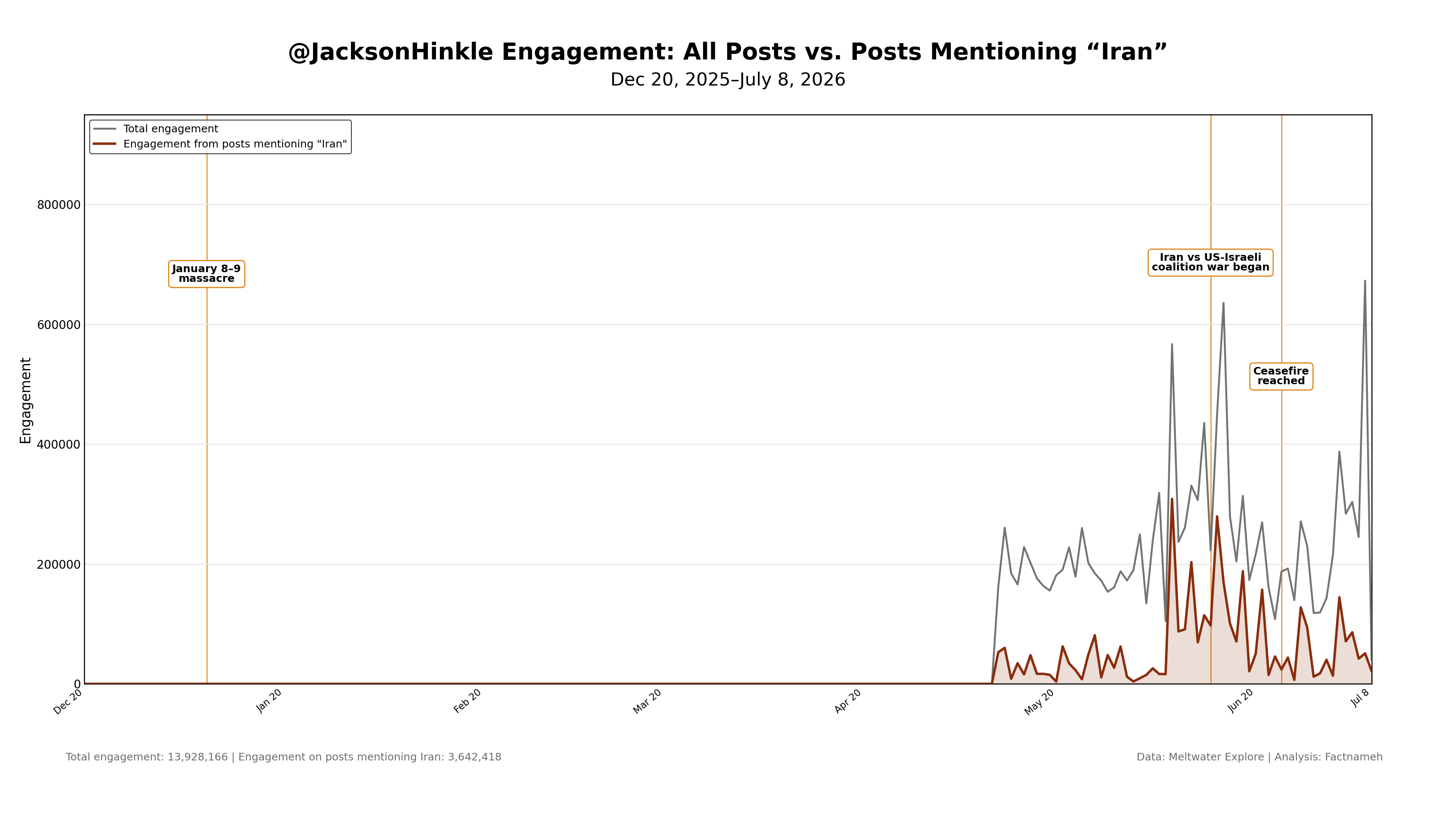
The selection of guests allowed the same message to reach audiences with different politics. Hinkle calls himself a Marxist-Leninist while supporting the MAGA movement, gun rights, and fossil fuels. He attacks the “deep state” (unelected officials believed to exert hidden influence over government) and presents U.S. foreign policy as a betrayal of ordinary Americans. In Tehran, he could frame support for the Islamic Republic as resistance to American imperialism and rebellion against the establishment at home.
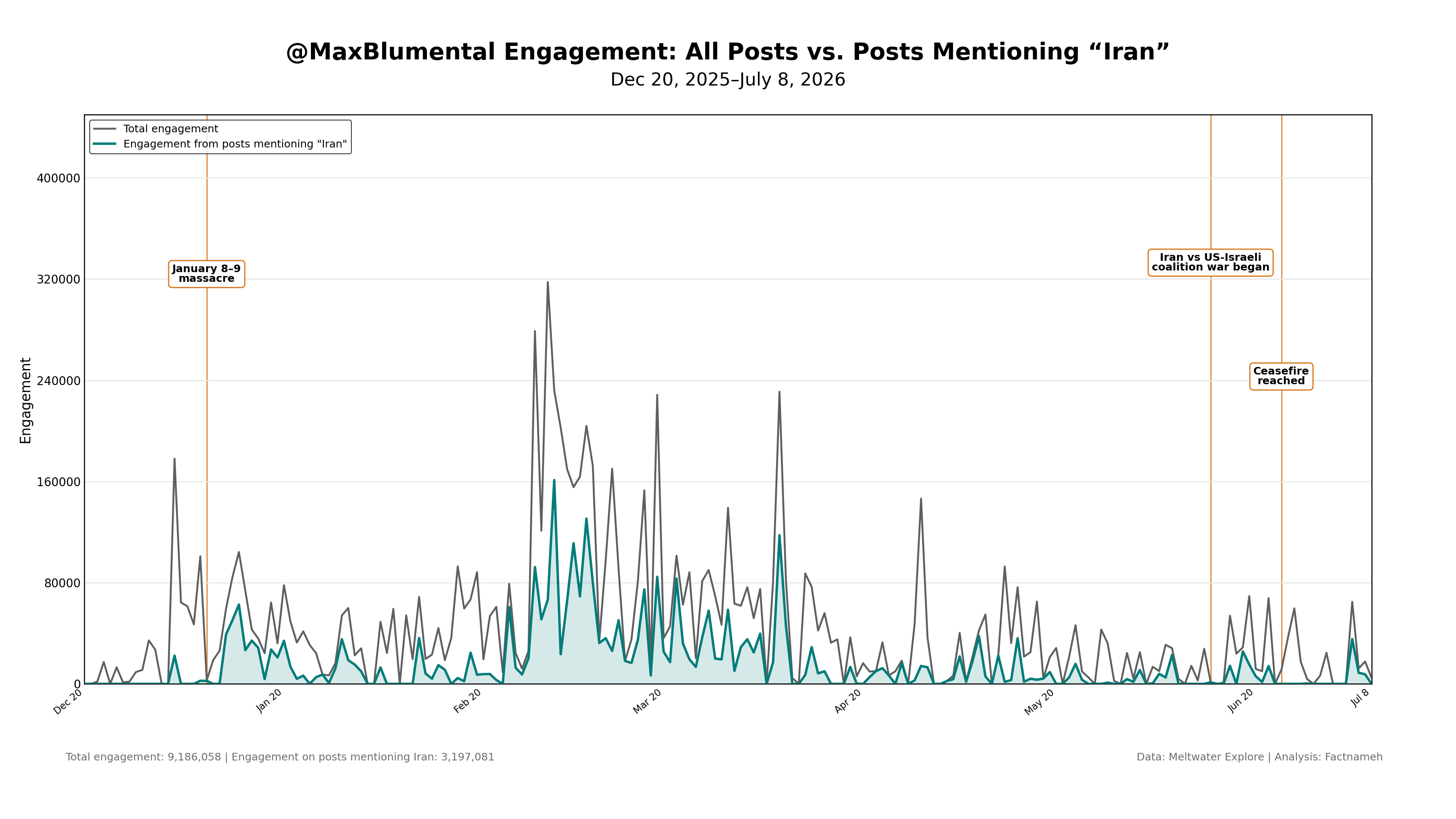
Max Blumenthal carried this narrative to a different audience. His outlet, The Grayzone, presents itself as anti-imperialist and appeals primarily to left-wing readers who view U.S. policy in the Middle East through the lens of war and intervention. At the funeral, Blumenthal repeatedly appeared with Mohammad Marandi, an Iranian academic and commentator who has become the unofficial representative of the Islamic Republic in English-language media.
Marandi provided the political interpretation that Iranian officials sought to attach to the gathering. He argued that the turnout disproved Western claims that the Islamic Republic lacked public support. But a large public gathering, even one involving hundreds of thousands of people, cannot by itself establish the views of a population of more than 90 million people, particularly in a highly contested political environment. In that version of events, the funeral was not simply a large ceremony. It was a popular verdict on the legitimacy of the state.
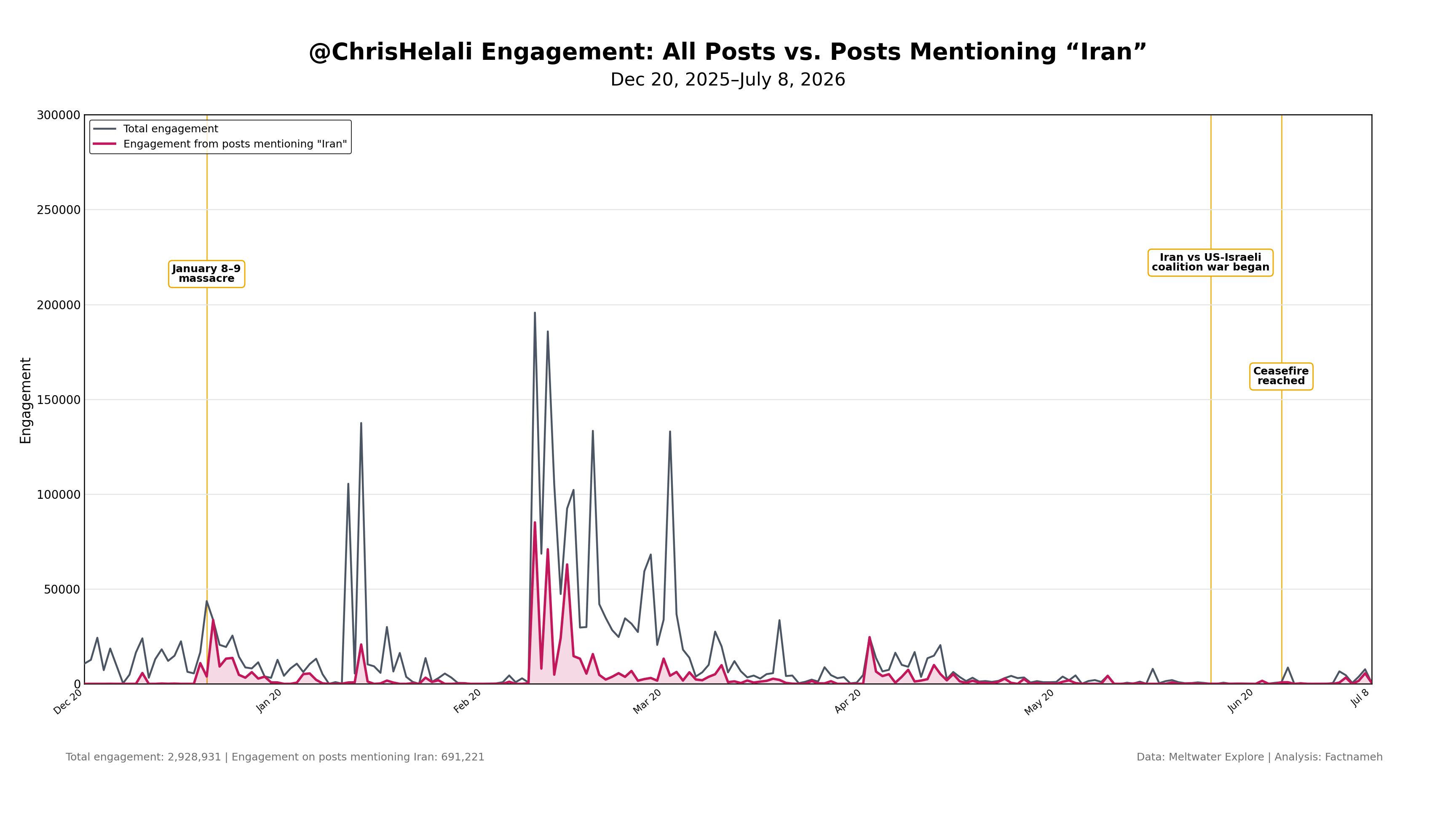
Christopher Helali, an American political activist and central council member of Hinkle’s American Communist Party, carried a similar message. His presence connected the funeral to a digital political space where anti-imperialist language overlaps with themes familiar to segments of the American populist right.
The language shifted depending on the audience, but the underlying narrative remained the same: Iran had survived the war, the public remained loyal to the political system, and the transfer of power had been accepted. Reports of political division could therefore be dismissed as a false Western narrative rather than a reflection of domestic realities.
This was how the funeral of Ali Khamenei, the former Supreme Leader of the Islamic Republic, was reframed for international audiences. The foreign influencers did not need to fabricate the crowds; they only needed to present them as evidence of widespread public support for the Islamic Republic. A crowd numbering in the hundreds of thousands was sold to foreign audiences as 20, 30, or even 40 million people, creating the impression among international observers of overwhelming public support and national unity.
So they’re just doing what the US and Israel do, only better?